
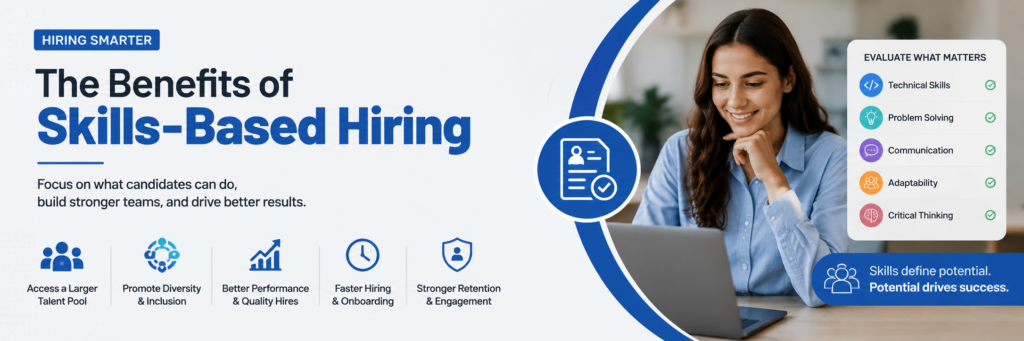
Traditional hiring often focuses heavily on degrees, job titles, or years of experience. While these qualifications remain valuable, many organizations are shifting toward skills-based hiring—a recruitment approach that prioritizes a candidate’s abilities and potential over traditional credentials.
Skills-based hiring allows employers to access a larger talent pool. Many highly capable professionals develop valuable skills through practical experience, certifications, freelance work, or self-learning rather than formal education. By focusing on demonstrated abilities, companies can discover talented individuals who may otherwise be overlooked.
This approach also improves diversity and inclusion. Removing unnecessary educational or experience requirements creates opportunities for candidates from different backgrounds while reducing unconscious bias during recruitment.
Employers benefit from better job performance because hiring decisions are based on the actual skills required for success. Practical assessments, technical tests, portfolio reviews, and behavioral interviews provide a clearer understanding of a candidate’s capabilities than resumes alone.
Skills-based hiring can also reduce recruitment time and improve employee retention. Candidates selected for their ability to perform the work often adapt more quickly and feel more confident in their roles.
Technology has made skills-based recruitment even more effective. Modern recruitment platforms allow employers to search candidates based on verified skills, certifications, languages, and technical competencies, making it easier to identify qualified professionals.
By focusing on what candidates can do rather than where they studied or worked, organizations build stronger, more capable teams prepared to meet today’s rapidly changing business needs.