
The modern workplace has evolved significantly, giving employers more flexibility than ever before. One of the most important hiring decisions companies face is whether a role should be remote, on-site, or a combination of both. Each approach offers unique advantages depending on business objectives and job requirements.
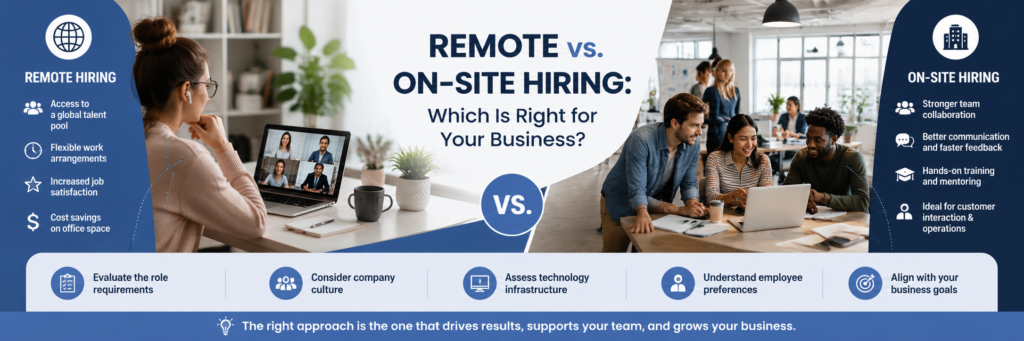
Remote hiring expands access to talent beyond geographical boundaries. Employers can recruit highly qualified professionals from different cities or even different countries, increasing the likelihood of finding specialized skills. Employees often appreciate flexible work arrangements, leading to improved job satisfaction and work-life balance.
However, remote work also requires strong communication, effective collaboration tools, and clear performance expectations. Organizations must ensure employees remain connected and engaged despite working from different locations.
On-site hiring remains the preferred option for many industries that require physical presence, direct customer interaction, or hands-on collaboration. Working together in the same location often strengthens team relationships, encourages spontaneous problem-solving, and simplifies training for new employees.
Many organizations now adopt a hybrid model that combines the benefits of both approaches. Employees split their time between the office and remote work, offering flexibility while maintaining regular in-person collaboration.
Before deciding, employers should evaluate the nature of the role, company culture, customer needs, technology infrastructure, and employee preferences. There is no universal solution.
The most successful hiring strategy is one that aligns with your business goals while supporting employee productivity, collaboration, and long-term satisfaction.