
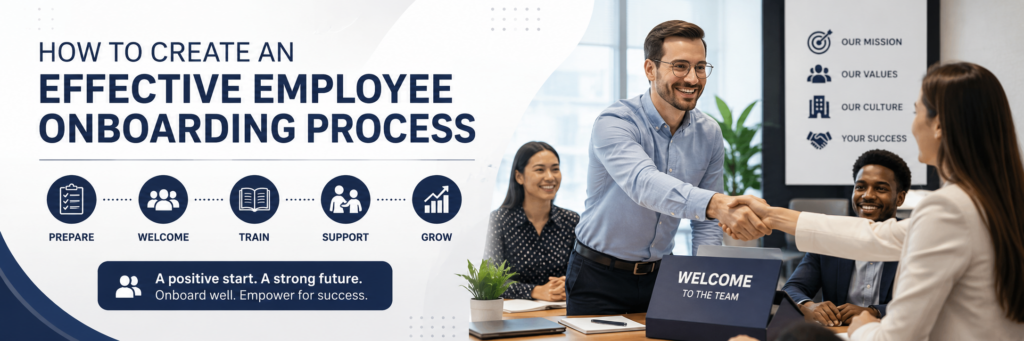
Hiring the right employee is only the beginning of the recruitment journey. An effective onboarding process helps new hires integrate into the organization, understand their responsibilities, and become productive more quickly. A positive first experience also improves employee engagement and long-term retention.
Preparation should begin before the employee’s first day. Ensure all necessary equipment, system access, workspace arrangements, and documentation are ready in advance. A well-organized first day demonstrates professionalism and makes new employees feel welcomed.
Introduce new team members to the company’s mission, values, organizational structure, and workplace policies. Providing clear expectations helps employees understand how their role contributes to overall business success.
Assigning a mentor or onboarding buddy can significantly improve the experience. Having an experienced colleague available to answer questions helps new employees build confidence and adapt more comfortably to the workplace.
Training should be structured and gradual rather than overwhelming. Break learning into manageable stages and provide access to guides, documentation, and learning resources. Regular check-ins during the first few weeks allow managers to monitor progress and address any concerns early.
Encourage open communication by inviting feedback from new employees. Understanding their onboarding experience allows organizations to continuously improve the process for future hires.
Successful onboarding extends beyond orientation. Continued support, career development opportunities, and regular performance discussions help employees remain motivated and engaged long after their first day.
A thoughtful onboarding process benefits both employees and employers by increasing productivity, strengthening workplace relationships, and laying the foundation for long-term success.