
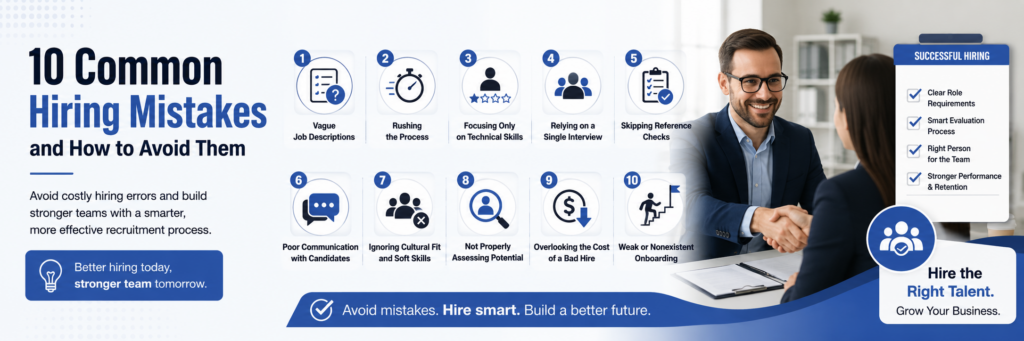
Hiring the right employee is one of the most important decisions any organization can make. However, even experienced recruiters and hiring managers can make mistakes that lead to poor hiring decisions, increased turnover, and unnecessary recruitment costs. Understanding these common pitfalls can help businesses improve their hiring process and build stronger teams.
One of the biggest mistakes is creating vague job descriptions that fail to communicate expectations. Candidates need a clear understanding of the role before applying. Another common issue is rushing the hiring process simply to fill a vacancy quickly, often resulting in selecting the wrong candidate.
Many employers also place too much emphasis on technical skills while overlooking cultural fit, communication abilities, and problem-solving skills. A successful employee should not only perform the job well but also work effectively with the team and align with the company’s values.
Another frequent mistake is relying on a single interview. Using multiple interview stages, practical assessments, or structured interview questions provides a more complete picture of each candidate’s abilities. Employers should also verify references whenever appropriate to confirm employment history and performance.
Poor communication during recruitment can damage an employer’s reputation. Candidates appreciate timely updates, clear expectations, and respectful interactions throughout the hiring process. Even unsuccessful applicants are more likely to speak positively about your company if they have a professional experience.
Finally, failing to provide a structured onboarding process can reduce employee engagement during the first few weeks. A successful hiring process continues beyond signing the employment contract.
By avoiding these common mistakes and following a structured recruitment strategy, companies can improve hiring quality, reduce turnover, and create a more productive workforce.