
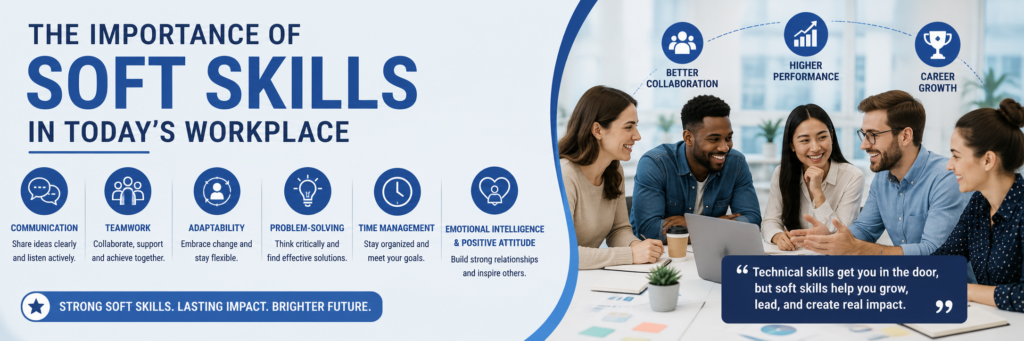
Technical knowledge may help you get hired, but soft skills often determine your long-term success. Employers increasingly value professionals who can communicate effectively, collaborate with others, solve problems, and adapt to changing work environments.
Communication is one of the most important soft skills. Being able to express ideas clearly, listen actively, and communicate respectfully improves teamwork and reduces misunderstandings.
Teamwork is equally valuable. Most organizations rely on collaboration between departments and individuals to achieve common goals. Employees who support colleagues and contribute positively to group projects often become valuable members of the organization.
Adaptability has become essential in today’s fast-changing workplace. Technology, business priorities, and customer expectations continue to evolve, making flexibility an important characteristic for every professional.
Problem-solving and critical thinking enable employees to identify challenges, evaluate solutions, and make informed decisions. Employers appreciate individuals who can work independently while remaining focused on achieving results.
Time management, emotional intelligence, leadership potential, and a positive attitude also contribute to career growth. These skills improve workplace relationships and prepare employees for future leadership opportunities.
While technical skills may change throughout your career, strong soft skills remain valuable across every industry. Investing in your personal and professional development will help you succeed regardless of your profession or career stage.